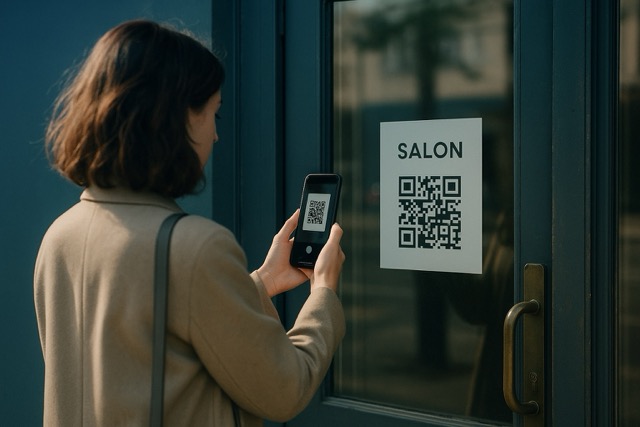
Someone arrives at your business after closing, or pauses outside because they want to know what you offer. A locked door should not be the end of that interest. A storefront QR code can point them to hours, services and a useful next step.
The sign needs a clear promise: “Scan for hours and appointments” is more useful than a QR code on its own. The page behind it should fulfill that promise without making the visitor hunt.
Build the page around the person outside
A visitor at the door has different needs from someone browsing your full website. Start with the information that helps them decide what to do now:
- When to return: Your current opening hours and any clearly written exceptions.
- What is available: A short service description or a link to your current menu.
- How to take the next step: Your phone, an enquiry form or a link to your existing appointment service.
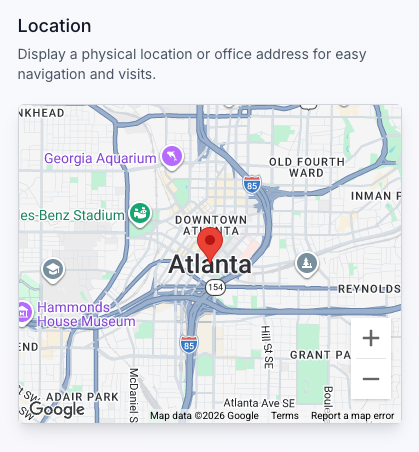
- How to find you again: Your location and a contact they can save.
In QRown, availability, location, text, contact and link blocks can provide this information. These options have plan-dependent access and limits. A booking link takes the visitor to your scheduler; QRown is not the appointment-booking system.
Three useful storefront setups
A salon after closing
Put tomorrow's hours, the service list and “Choose an appointment” near the top. Link the appointment action to the salon's booking provider. Use a lead form for questions that need a personal response, and explain when someone will answer.
A café before a first visit
Lead with hours and a clearly labeled menu link. Keep the page useful to someone deciding whether to come back with a friend. If you add online ordering, link to the service where the order is actually placed.
A repair or installation business
Explain your service area in plain language and give a phone or enquiry route. Set expectations about response times. A form that can be submitted at night does not mean staff are available around the clock.
Keep the printed sign and live information aligned
QRown's main profile QR opens the profile you maintain. Update the page when hours, services or links change, and the same printed code can still reach it. Keep date-sensitive offers on the page when practical, rather than permanently printing them beside the code.
Leave the most essential information readable on the door too. Someone without a working camera or internet connection should still be able to find your hours or contact number.
Test where a customer will actually stand
- Place a draft sign where it is easy to approach without blocking the doorway.
- Use a dark code on a light background, with clear empty space around it.
- Test through the actual glass, at the intended distance and under daytime and evening lighting.
- Check the public profile and its main action on more than one phone.
- Inspect the finished sign for glare, damage or anything covering the code.
There is no single size that guarantees a scan across every window, finish and distance. Prove that your printed version works before ordering more. Ask your printer about materials suitable for the exposure and mounting surface.
Find out whether the sign earns its place
Use a separately named QR for the door if you want to distinguish it from a counter card or flyer; additional code allowances vary by plan. In Statistics, compare its recorded scans over time. Then look at the profile's relevant actions and the enquiries people submit.
If people scan but do not use the main action, check whether it is visible and matches the sign. Confirm completed appointments in your booking provider. The scan-tracking guide explains how to read those signals without confusing them with sales.
For other physical placements, see practical QR marketing ideas.