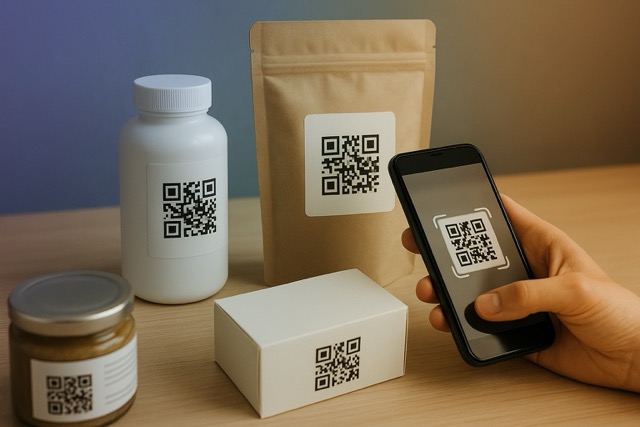
The customer has bought the product, but they may still need help using it, caring for it or ordering it again. Packaging has little room for all that information. A QR code can give those next questions a clear place to go.
Use the code to support the product experience. “Scan for setup instructions” tells a buyer what they will gain. An unexplained code that opens a general homepage leaves them with another search.
Choose a useful reason to scan
- Help with first use: Link to setup steps, a demonstration or an explanation of the product.
- Care and maintenance: Make the relevant instructions easy to find after unboxing.
- Support: Provide a clear contact route for questions.
- Reordering: Link to the existing shop page for the product or its replacement parts.
- Product background: Explain the making process when that adds something the customer values.
Pick a primary reason and keep it first on the page. A reorder offer should not get in the way of the instructions a new buyer needs.
Map the customer path before adding the code
Consider a small ceramics studio shipping a handmade mug. Its insert says “Care for your mug.” The QR opens a profile with a short introduction, a clearly labeled care-guide link, a support email and a link to the studio's shop.
The buyer gets help immediately, then has a route back to the maker.
A QRown profile can hold text, contact actions and links to your existing guides, videos and shop. Gallery and other block options depend on your plan. Keep required or essential information on the product or packaging where it belongs; a web link is an additional route, not a substitute for every printed instruction.
Decide what needs to stay current
The main QRown profile QR always opens the profile. You can update that page's content without changing the printed QR. This is useful when a guide moves or a support link changes.
Additional QR codes and Print Studio QR codes can use editable external destinations. If you choose that approach, changing the destination can keep an existing code useful, but the new page should still fulfill the promise on older packaging.
Keep instructions for older product versions available. Redirecting every package to the latest product can leave an earlier buyer with the wrong information. Use separate, clearly named sources or destinations when versions need different guidance, within your plan's QR allowance.
Make the code work on the finished package
A clear QR on a flat design file can become difficult to scan when printed over a fold, wrapped around a narrow jar or covered by reflective film. Choose placement based on the finished object.
- Use a flat, visible area away from seams, folds and tear lines.
- Keep strong contrast and clear empty space around the code.
- Check whether glare, curves or protective wrapping affect readability.
- Put a short instruction beside the QR and a readable contact or URL fallback where practical.
- Test a physical sample at a comfortable distance with more than one phone.
Do not assume a size or decorative finish will work just because another package uses it. Ask your printer for a proof and scan the version a customer will receive.
Measure interest without confusing it with purchases
If you want to compare products or packaging versions, use a different QR identity for each source you intend to measure. The same code on every box gives a combined scan total. It cannot identify which individual box a customer used.
Use QRown Statistics to review recorded scans and activity on the profile. Look for whether buyers find the intended help or contact action. A scan is not evidence of a unique buyer, a resolved support issue or a repeat purchase; check those outcomes in your support and sales records.
If you add an enquiry form, ask only for information useful to the response. Form fields and submission visibility depend on plan. This provides a route for a customer to contact you, rather than assuming you can identify everyone who scans.
A final check before production
- Confirm that the printed promise matches the first useful action on the page.
- Test the code on a finished packaging sample.
- Open every instruction, shop and support link on a phone.
- Check that customers can access the profile while signed out.
- Decide who will maintain the destination while this packaging remains in use.
For measurement, read how to compare QR sources. For more placements, explore QR marketing ideas.