
People may meet you at an event, see your work in print, then find a different version of you online. A consistent profile helps them connect those impressions and understand what to contact you about.
A QR code can bring those physical introductions to the same current destination. Before adding it everywhere, make sure the profile shows your name, your work and a clear next step. These ten uses each connect a particular moment to something useful.
Make the destination recognizable first
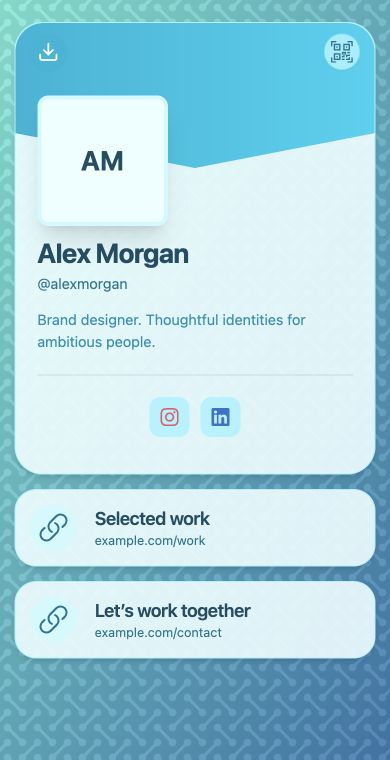
Use a consistent name, suitable photo and a short description of the work you want to be known for. In QRown, arrange contact details and links so the most relevant action is easy to find. Appearance options and content limits vary by plan.
1. Put it on your business card
Give a new contact somewhere to see current work after the introduction. Print “Scan for my work and contact details” beside the code and keep your name readable. Your QRown main QR can continue opening the profile as its content changes. The digital business card guide explains the print-and-profile combination.
2. Connect a printed résumé to relevant evidence
A résumé has limited room for work samples. Link its QR to a profile that makes the relevant portfolio or project easy to find. Keep your qualifications and contact details on the résumé itself, and provide a clickable URL in digital copies. The extra material should support your application without being required to understand it.
3. Make your email signature a consistent introduction
Link your name or a short “Work and contact details” label to the profile. An optional QR can help a recipient move from a desktop screen to their phone. Always include the clickable link: scanning is an unnecessary extra step for someone already reading on one phone.
4. Give printed handouts a current follow-up page
A workshop sheet or service brochure can point to related resources, your work and a contact route. Keep the promised material near the top. For example, a facilitator's printed worksheet could lead to a profile link labeled “Workshop resources,” with a separate enquiry action for future sessions.
5. Connect your social presence to the same identity
Use the profile URL where a social platform supports a clickable bio link. A QR can supplement a banner or graphic intended for another screen, but test the displayed crop and keep a text link wherever possible. A recognizable photo and description help followers confirm they have found the right person.
6. Make an event badge useful after the conversation
A badge can give someone a quick way to save your contact while you are speaking together. Put the QR on a flat area that is not covered by the holder or lanyard, and test the actual badge. Explain what the scan opens and invite the person to use it rather than relying on people scanning you in passing.
7. Use a presentation's closing slide for the next step
A speaker can offer slides, a related article or a way to enquire about a future session. Display the QR long enough for the audience to use it and test from the back of the room. Keep a short, readable link beside it and in any shared slide file.
8. Put your identity beside physical work
An artist's label, a sample booklet or a maker's insert can connect the work to its creator. Let the profile explain your process and link to commissions or related work. For customer instructions and aftercare, use the more specific packaging QR workflow.
9. Keep a printed campaign's message focused
When promoting one service, make the destination reflect that offer. A photographer advertising restaurant shoots should lead with relevant work, not an unrelated gallery. On a plan with additional QR codes, give the campaign its own named source so you can compare recorded scans without confusing them with everyday networking.
10. Give live-event conversations a clear continuation
After a panel or demonstration, invite interested people to an enquiry form or a specific contact route on your profile. State what you can help with. Someone who wants to discuss a project needs a different action from someone who only wants a copy of your contact details.
Keep the promise consistent as you update
The main QR continues opening your QRown profile, so you can change your work samples or contact information without changing that QR. Keep older printed promises in mind: a handout that says “Workshop resources” should not later land on a page where those resources have disappeared.
Choose two or three placements that fit how people actually encounter you. Use Statistics to review recorded engagement, and assess whether the resulting conversations match the work you want. Scans measure an action, not how many people remember your brand or want to hire you.