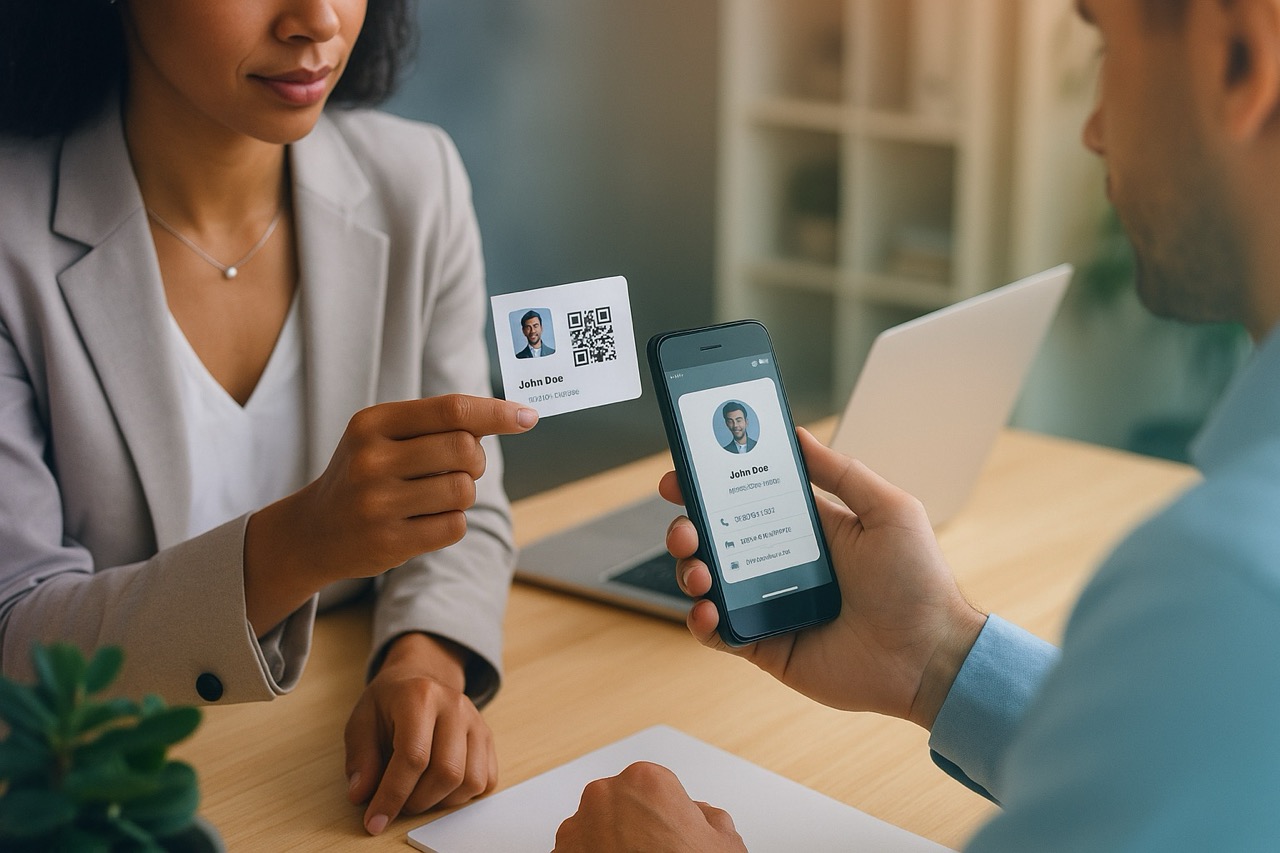
After a good introduction, your contact details still have to make it into someone's phone. Asking them to type a name, company, email and number creates work at the moment you want the connection to be easy.
A vCard is a contact file, usually ending in .vcf, that an address-book app can import. It can contain your name, phone number, email, company, website and other contact information. It gives the recipient a starting point they can review and save instead of typing each field.
A QR code opens the door; the vCard saves the details
A QR code and a vCard do different jobs. The QR gets someone to your profile. The vCard transfers the contact information from that profile into their address book.
With QRown, the recipient scans your profile QR, opens the page and chooses Save contact. Their phone downloads the contact file. Depending on the device and browser, they may need to open that file, choose an address-book app and confirm the save.
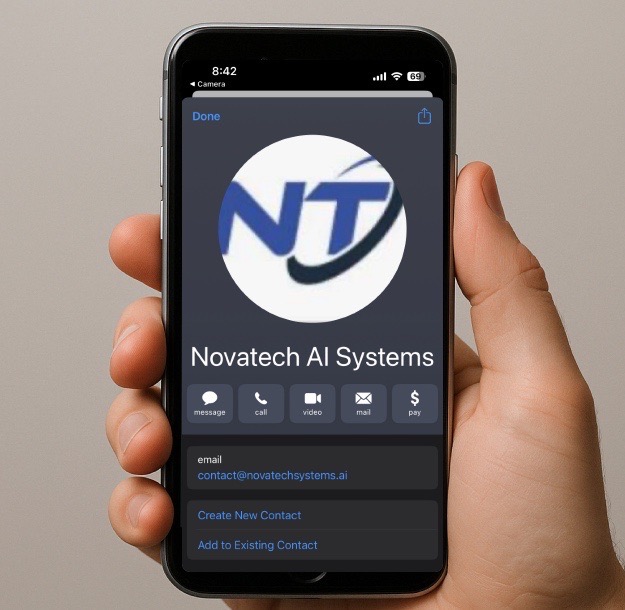
Someone who only wants to call or email can use the profile's contact actions instead. They do not have to save the file first. That is one reason a digital business card can be more useful than sharing only a contact file.
Make the saved contact recognizable later
Your number is useful only if the recipient remembers whose number it is. Use a name and company they will recognize from the conversation. Check your work details and include the email or phone you want prospective clients to use.
QRown builds the contact file from your profile's contact and work information, including supported links and address details. Its contact-card settings also offer a Reminder note and Search terms on eligible plans. A short note such as “Commercial photographer for local restaurants” can provide context when a name alone does not.
Use terms that apply to everyone receiving that profile. An event-specific note is confusing if you later use the same profile elsewhere. Address-book apps differ in how they display and search imported notes, so test the result on the phones your audience uses.
Where this helps in real conversations
- A trade-show introduction: A buyer saves your company and number while your discussion is still fresh.
- A completed service visit: A homeowner keeps your business contact for the next job.
- A consultant's first meeting: A prospective client saves an accurate email and the profile link containing your work.
This removes some manual entry and gives the relationship somewhere to continue. It does not capture the recipient's details for you. If you need an enquiry you can respond to, invite them to submit a lead form or send a message.
Set up and test your QRown contact file
- Add and check your profile name, work details, phone and email blocks.
- Use Save contact in the editor to inspect the exported contact on your phone.
- If available on your plan, add a useful reminder in the contact-card settings.
- Test the public scan → profile → download → import sequence on another phone.
You do not need to invent a separate contact card by hand. Review what QRown exports, including any links and address details, before sharing it publicly.
Does a saved vCard update automatically?
No. A saved contact is a copy of the details at the time of download. Updating your QRown profile changes future downloads and the live profile; it does not rewrite someone else's address book. If your number changes, tell existing contacts and invite them to save the updated version.
Similarly, a contact-card download in Statistics records interest in saving your information. It cannot confirm that someone completed the import or will follow up.
Use the no-app sharing guide to put this into practice at your next meeting.